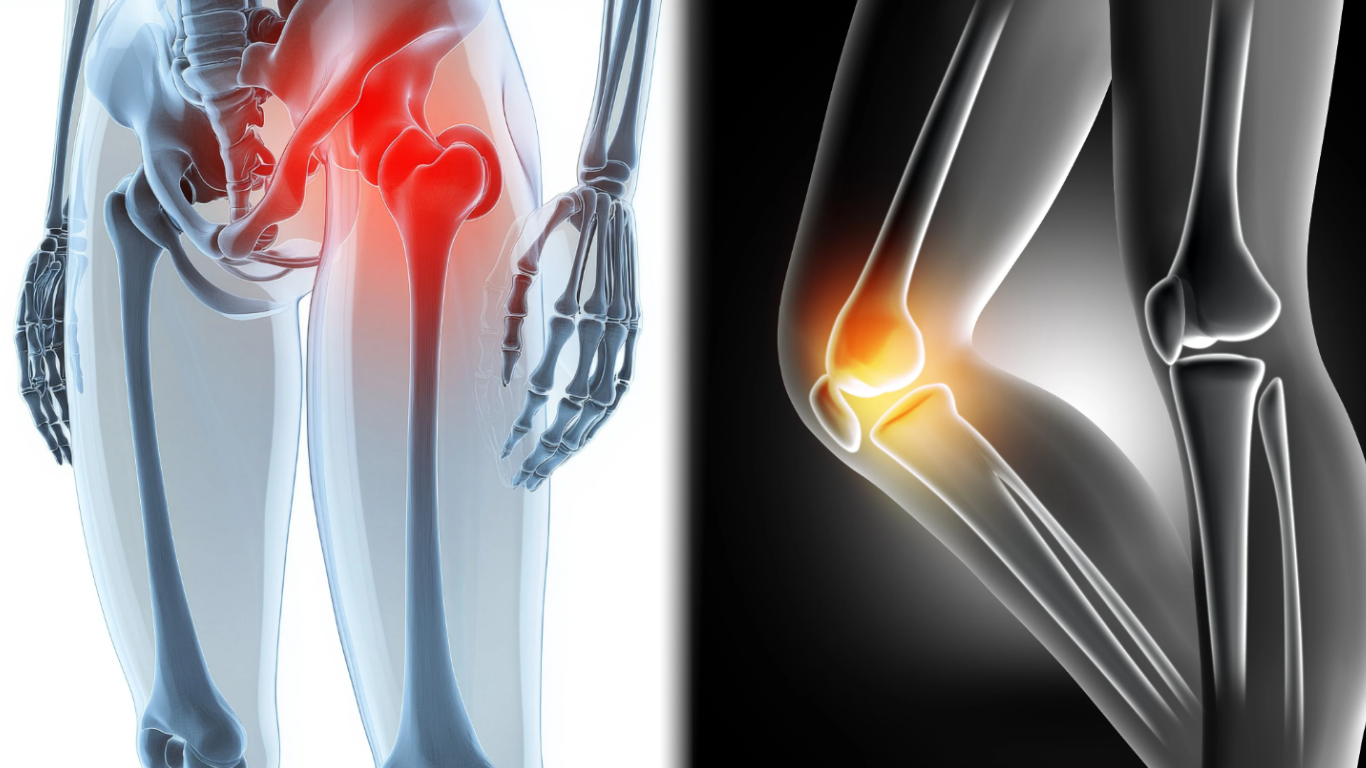
Osteoarthritis of hip knee is a common condition that can make everyday movements harder. With the right care, you can keep your joints strong, flexible, and continue enjoying daily activities.
Understanding Osteoarthritis of the Hip and Knee
Osteoarthritis happens when the cartilage that cushions your joints slowly wears away. This can cause stiffness, mild pain, and reduced flexibility. Hips and knees are most affected because they support most of your body weight. With proper care, you can manage symptoms and maintain mobility.
Common Signs of Hip and Knee Osteoarthritis
Watch for signs like:
- Stiffness in the hip or knee, especially in the morning or after resting
- Mild aching or discomfort during movement
- Trouble bending or straightening the joint
- Occasional swelling
Spotting these signs early allows you to take steps to protect your joints.
Why Does Hip or Knee Pain Hurt More at Night?
Pain in the hip or knee can feel stronger at night. During the day, moving around keeps joints flexible and muscles active, which helps reduce discomfort. At night, joints may stiffen, and inflammation can be more noticeable. Reduced activity also lowers blood flow, making pain feel sharper. Gentle stretches before bed, a comfortable sleeping position, and using supportive cushions can help reduce nighttime discomfort.
Tips to Keep Your Joints Strong and Flexible
- Gentle Exercise: Activities like walking, swimming, or cycling keep joints moving without putting too much stress on them.
- Strength Training: Strengthening the muscles around your hips and knees reduces joint pressure. Simple exercises like leg lifts or seated knee extensions work well.
- Keep a Healthy Weight: Extra body weight can make your hips and knees work harder, causing discomfort. Maintaining a healthy weight helps your joints move more easily and feel more comfortable every day.
- Stretching: Stretch daily to keep joints flexible and prevent stiffness.
- Professional Guidance: A trained physiotherapist can design exercises and therapies suited for your needs.
How Does Weight Affect Hip and Knee Joints?
Your body weight directly affects the stress on your hip and knee joints. Extra weight increases pressure, which can wear down cartilage faster and make movement harder. Maintaining a healthy weight reduces strain and helps your joints move smoothly.
How Physiotherapy Helps with Hip and Knee Health
Physiotherapy can help keep your hip and knee joints comfortable, flexible, and strong. A physiotherapist can create personalised exercise plans for your joints. These exercises improve flexibility, build supporting muscles, and reduce strain during daily activities. Physiotherapy also helps you stay active and maintain a better quality of life.
If you are searching for Osteoarthritis of hip knee in Seawoods, physiotherapy can help improve joint movement and make daily tasks easier.
Benefits of Regular Physiotherapy
- Increased flexibility in joints
- Stronger muscles around the hips and knees
- Reduced discomfort while moving
- Better overall quality of life
For those with Hip osteoarthritis Navi Mumbai, consistent physiotherapy can make daily activities easier and more comfortable.
Final Thoughts
Taking care of your hip and knee joints is important, and small daily steps can make a big difference. Gentle exercises, maintaining a healthy weight, stretching, and professional guidance can help you stay active and move comfortably. At Cornerstone Physiotherapy Clinic, the team can guide you with simple exercises and therapies to keep your joints strong and flexible. Start caring for your joints today and enjoy a more active, comfortable life, one step at a time.



Leave a Reply