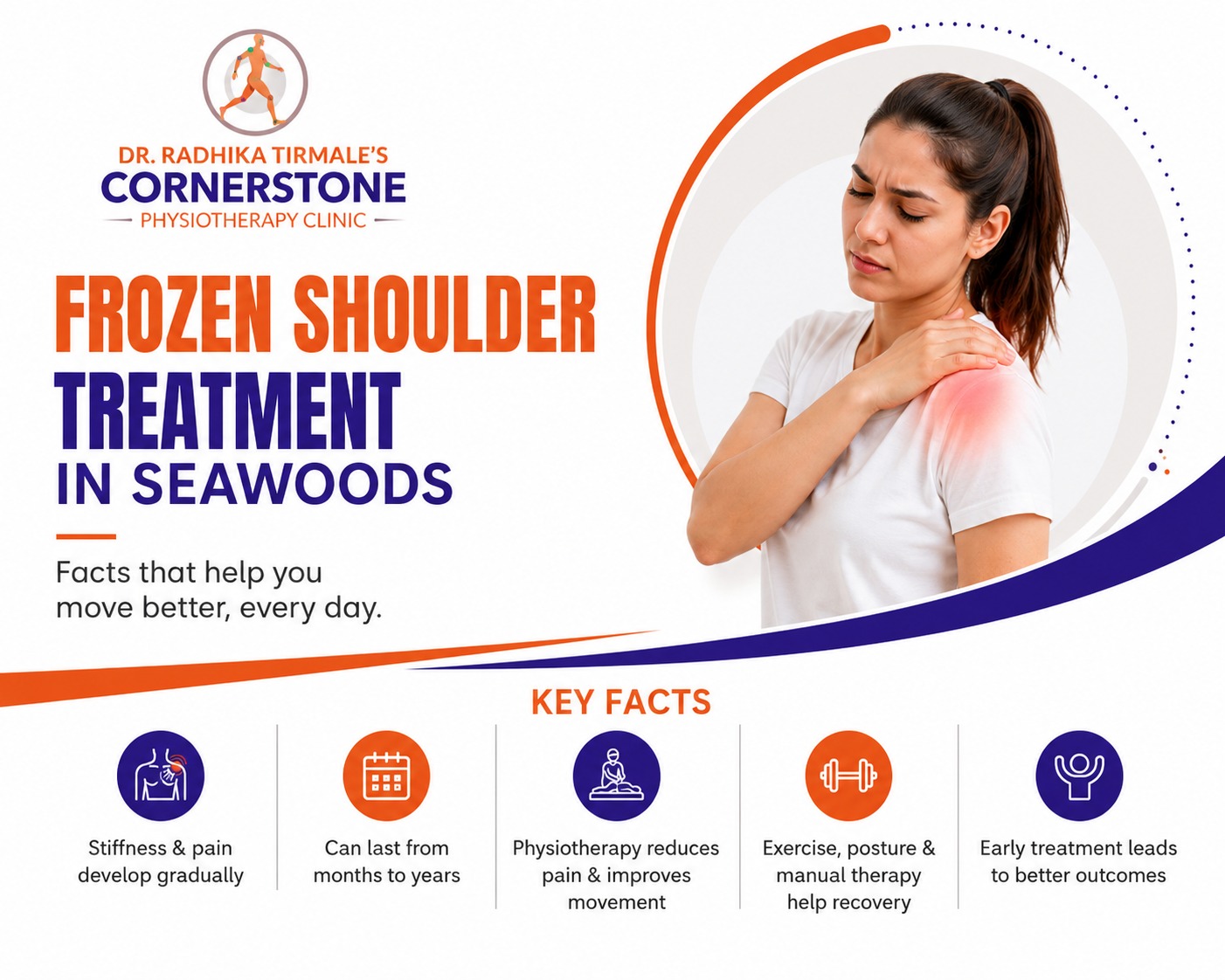
A stiff, aching shoulder is something most people brush off until it starts interfering with sleep, dressing, or simple daily movements. Part of the reason this condition lingers untreated for so long is the sheer amount of inaccurate advice floating around, whether from well-meaning relatives or random internet forums. Before deciding how to handle Frozen Shoulder Treatment in Seawoods, it helps to know what’s actually true about how this condition behaves.
What is Frozen Shoulder?
Doctors refer to this condition as adhesive capsulitis, a term describing how the lining around the shoulder joint slowly thickens and loses its elasticity. There’s rarely a single obvious cause behind it, and instead of appearing overnight, the restriction builds up gradually until everyday actions, reaching for a cupboard, putting on a jacket, or rolling over in bed, become surprisingly painful.
Common Symptoms of Frozen Shoulder
Catching this early changes the whole recovery experience. Signs worth paying attention to include:
- A dull ache that flares up once it gets dark
- Trouble raising the arm past shoulder height
- Awkwardness when reaching behind to fasten a bra or zip
- Movement that feels noticeably more limited than before
- Soreness that disrupts sleep on one side
- Stiffness that quietly worsens week after week
Myths and Facts About Frozen Shoulder
Myth 1: Given Enough Time, It Heals Itself
Fact: A handful of mild cases do settle on their own, but for most people, an untreated shoulder stays restricted for anywhere between one and three years, and some never fully regain the movement they once had. Choosing to wait it out usually means tolerating pain for far longer than necessary. Starting physiotherapy early instead shortens that timeline and helps preserve mobility before it’s lost.
Myth 2: This Is Strictly an Older Person’s Problem
Fact: People between 40 and 60 do make up the bulk of cases, yet the condition isn’t limited to that age range. Diabetes, thyroid disorders, and a prior shoulder injury or stretch of immobility can all raise risk regardless of age. Stiffness that appears unusual deserves a proper check rather than being dismissed because of someone’s age.
Myth 3: The Shoulder Needs Complete Rest
Fact: Avoiding movement entirely often backfires, letting the capsule tighten even further instead of loosening it. What actually helps is carefully guided motion combined with exercises designed for this exact problem. Cornerstone Physiotherapy Clinic’s therapists build that kind of gradual programme, expanding movement step by step without pushing past what each patient can tolerate.
Myth 4: It’s Just Another Word for Arthritis
Fact: These conditions have almost nothing in common at a tissue level. Arthritis stems from cartilage breaking down inside the joint, while frozen shoulder is a capsule problem entirely separate from cartilage damage. Telling the two apart requires a real clinical assessment rather than guessing based on how the pain feels.
Myth 5: Eventually, Surgery Becomes Unavoidable
Fact: Most people never reach that point. Manual therapy, stretching programmes, heat treatment, and progressive strengthening resolve the vast majority of cases without intervention. Surgical routes typically only come up after months of conservative treatment haven’t moved the needle.
Myth 6: Painkillers Are Enough to Handle It
Fact: Medication might take the edge off temporarily, but it does nothing to loosen the tightened capsule or bring back lost range of motion. What actually drives results is combining hands-on mobilisation with a personalised exercise plan, which is precisely the approach behind reliable Frozen Shoulder Treatment in Navi Mumbai.
Why Early Diagnosis Matters
This condition unfolds across three recognisable phases, freezing, frozen, and thawing. Pain climbs steadily during the freezing phase while movement keeps shrinking. The frozen phase is when stiffness peaks, making ordinary tasks genuinely difficult. Mobility then returns gradually once the thawing phase sets in. Catching Frozen Shoulder Treatment in Seawoods at the freezing stage, rather than waiting until things worsen, tends to shorten the whole ordeal considerably.
Choosing the Right Physiotherapy
How well someone recovers often comes down to the physiotherapist guiding them. A clinician worth trusting examines posture, joint mechanics, and movement patterns individually rather than reaching for a one-size-fits-all routine. Locals hunting for solid physiotherapy support nearby will quickly notice how much an experienced team changes the outcome, turning what could be months of frustration into visible, steady progress.
That level of personalised, results-driven care is what Cornerstone Physiotherapy Clinic delivers, blending manual therapy, exercise, and patient education to handle both pain and the underlying stiffness. People from neighbouring areas, including those specifically searching for Frozen Shoulder Treatment in Navi Mumbai, find the same emphasis on lasting function rather than short-term relief.
Frequently Asked Questions
- Can Frozen Shoulder Heal Without Going Under the Knife?
Yes, the great majority of patients improve significantly through physiotherapy and a properly guided exercise plan. - What’s the Typical Recovery Timeline for Frozen Shoulder?
It varies by case, though most people need a few months, with earlier treatment generally shortening the wait. - Will Frozen Shoulder Stay With Someone Permanently?
No, proper treatment helps most patients recover the majority or all of their original shoulder movement. - Does Having Diabetes Raise the Odds of Frozen Shoulder?
Yes, studies consistently show diabetics face a higher likelihood of developing this condition than others.
Final Thoughts
Frozen shoulder can wear people down, especially when bad information stands between them and a clear recovery plan. Acting quickly, sticking to the right exercises, and getting input from a trained professional helps most patients regain close to full shoulder function. Those exploring Frozen Shoulder Treatment in Seawoods will often find that starting physiotherapy early makes the biggest dent in pain, stiffness, and overall recovery time. The same pattern holds for people pursuing Frozen Shoulder Treatment in Navi Mumbai, where a structured, evidence-led plan produces comparable results. Rather than letting it drag on, get in touch with a qualified physiotherapist as soon as stiffness starts disrupting day-to-day life.