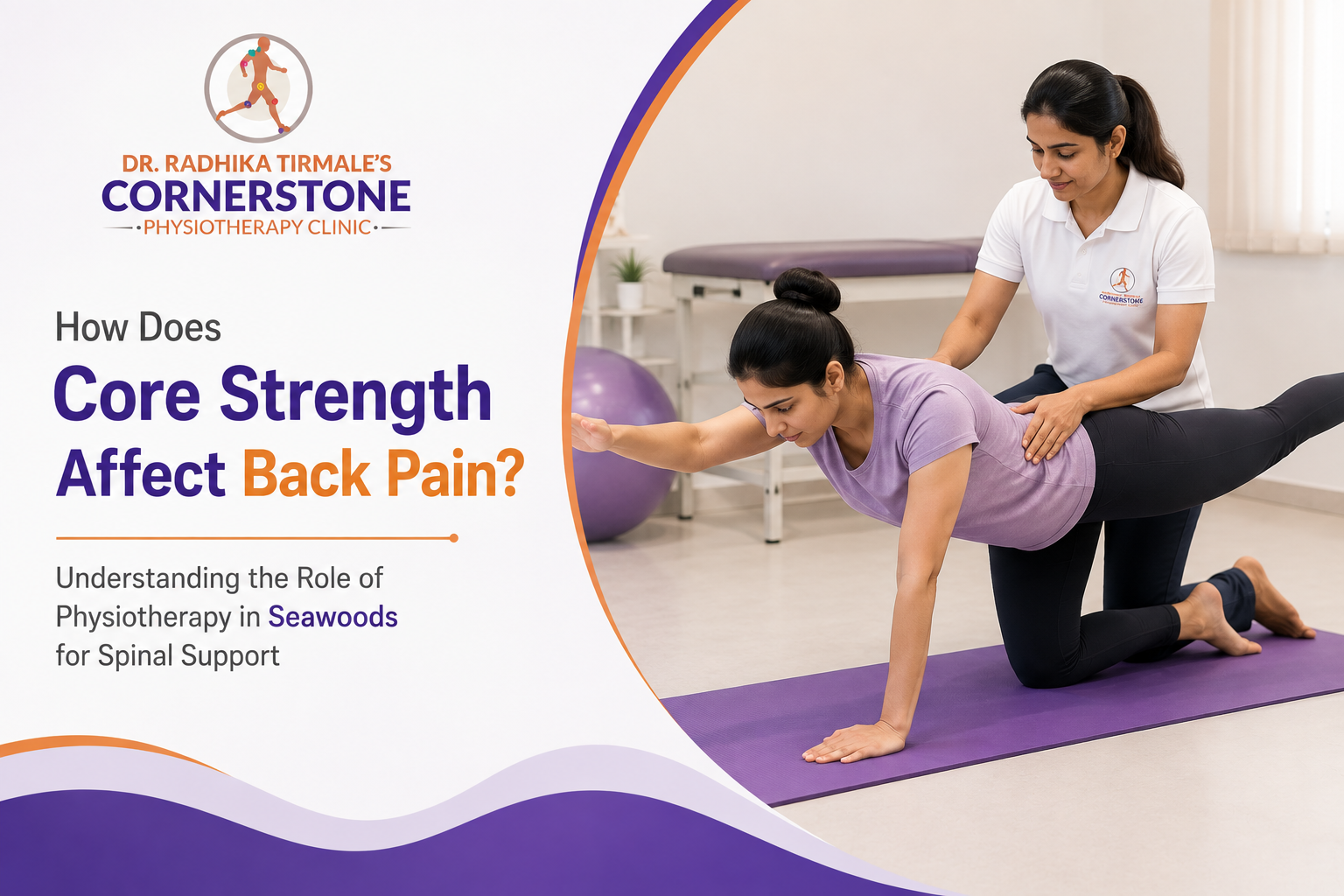
Back pain can make everyday activities such as sitting, walking, bending, or lifting uncomfortable. While several factors can contribute to back discomfort, weak core muscles may affect how the spine is supported during daily movements. Physiotherapy for back pain in Seawoods can help address muscle strength, movement control, flexibility, and posture through an individualized rehabilitation approach.
What Is Core Strength?
Core strength refers to the strength and control of muscles around the abdomen, lower back, pelvis, and hips. These muscles work together to support the trunk and help maintain stability during movement.
A strong core does not simply mean having strong abdominal muscles. Good core function involves coordination, endurance, balance, and the ability to control the spine while performing different activities.
How Can Weak Core Muscles Affect Back Pain?
The core helps distribute forces through the body during activities such as walking, reaching, lifting, and changing positions. When these muscles are weak or lack endurance, other muscles may have to work harder to maintain stability.
This may contribute to:
- Reduced trunk stability
- Poor movement control
- Increased strain during certain activities
- Difficulty maintaining proper posture
- Reduced tolerance for prolonged sitting or standing
- Recurring discomfort during physical activity
However, core weakness is not the only possible reason for back pain. A proper assessment can help identify the factors contributing to an individual’s symptoms.
Can Strengthening the Core Help With Back Pain?
For suitable individuals, strengthening exercises can help improve muscle endurance, movement control, and functional strength. Physiotherapy programs are generally tailored according to the person’s symptoms, physical condition, activity level, and goals.
Physiotherapy for back pain in Seawoods may include exercises that gradually improve core control while also addressing flexibility, posture, strength, and movement patterns.
The goal is not simply to make the muscles stronger. It is to help the body use those muscles effectively during everyday activities.
What Core Exercises May Be Included in Physiotherapy?
The exercises selected by a physiotherapist depend on the person’s condition. A program may progress from simple exercises to more challenging movements as strength and control improve.
Examples may include:
- Abdominal bracing
- Pelvic control exercises
- Bridging exercises
- Controlled leg movements
- Bird-dog exercises
- Modified planks
- Hip and trunk strengthening exercises
These exercises should be performed according to professional guidance, particularly when someone is experiencing ongoing or significant back pain.
How Does Physiotherapy Support Spinal Stability?
Physiotherapy takes a broader approach than core strengthening alone. A physiotherapist may assess posture, spinal movement, muscle flexibility, strength, balance, and functional activities to understand how these factors may relate to back discomfort.
Based on the assessment, the treatment plan may include:
- Therapeutic exercises
- Core strengthening
- Flexibility exercises
- Postural training
- Movement education
- Manual techniques when appropriate
- Gradual activity progression
This individualized approach can make back pain treatment in Navi Mumbai more focused on the person’s specific needs rather than relying on the same exercise program for everyone.
Why Is Gradual Progression Important?
Starting with exercises that are too difficult or increasing activity too quickly may cause unnecessary discomfort. Physiotherapy usually focuses on gradual progression so the body can adapt to increasing levels of activity.
A patient may begin with basic core activation and control exercises before progressing toward exercises that involve more strength, balance, and functional movement.
Regular practice can also help develop better movement habits that support daily activities.
Can Core Strength Help Prevent Recurring Back Pain?
Core strengthening may be one component of a broader strategy for reducing the risk of recurring back discomfort. Maintaining appropriate strength and mobility can help the body handle everyday physical demands more effectively.
However, long-term back pain management in Seawoods should also consider other factors, such as activity levels, work habits, posture, sleep positions, flexibility, lifting techniques, and overall physical conditioning.
A physiotherapist can help identify practical changes that fit into your daily routine.
Why Choose Cornerstone Physiotherapy Clinic?
Choosing the right physiotherapy clinic can make your rehabilitation journey more structured and comfortable. Cornerstone Physiotherapy Clinic focuses on individualized assessment and treatment plans based on each patient’s condition, activity level, and recovery goals.
Patients may benefit from:
- Personalised physiotherapy assessment
- Exercise programmes based on individual needs
- Core strengthening and mobility exercises
- Guidance on posture and movement
- Gradual progression of rehabilitation exercises
- Practical advice for managing back discomfort
- Ongoing support during the recovery process
A personalised approach can help patients understand their condition and learn appropriate exercises and movement strategies for everyday activities.
When Should You Consult a Physiotherapist?
Consider seeking professional evaluation if back pain:
- Continues for an extended period
- Frequently returns
- Limits normal activities
- Makes exercise difficult
- Affects sitting, standing, or walking
- Occurs repeatedly after specific movements
A physiotherapist can assess your condition and determine whether core strengthening is appropriate or whether another approach may be more suitable.
Final Thoughts
Core strength plays an important role in supporting the spine and improving movement during daily activities. With personalized back pain management in Seawoods, patients can work on strength, flexibility, posture, and better movement habits. Cornerstone Physiotherapy Clinic provides individualized physiotherapy guidance to support patients in managing back discomfort and improving overall physical function.


Leave a Reply