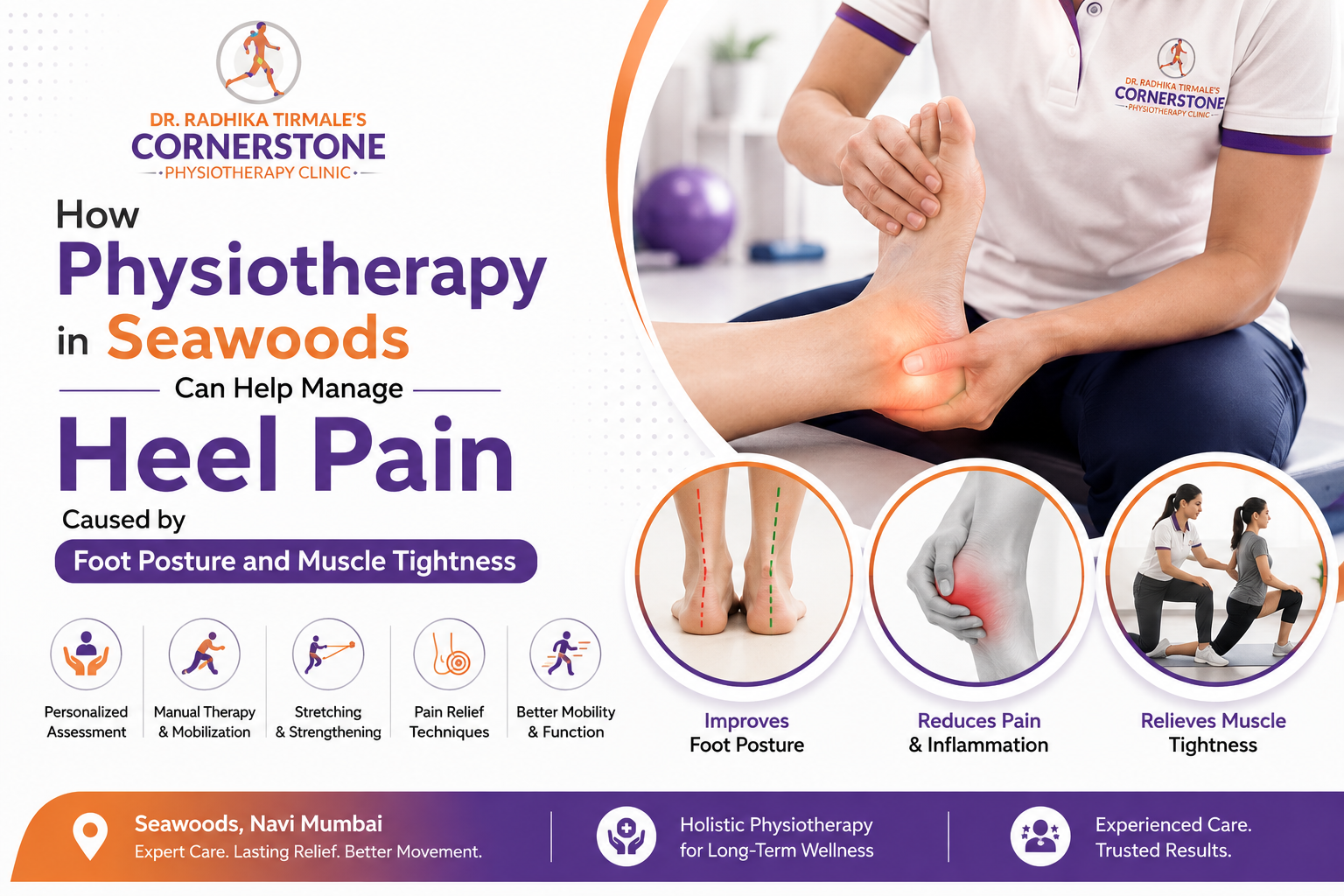
Heel pain can make everyday activities such as walking, standing, exercising, and climbing stairs uncomfortable. While occasional discomfort may improve with rest, recurring heel pain can affect mobility and quality of life. Poor foot posture, tight calf muscles, prolonged standing, unsuitable footwear, and repetitive strain are some factors that may contribute to heel discomfort.
At Cornerstone Physiotherapy Clinic, a personalised assessment can help identify movement, flexibility, and muscle-related factors that may be contributing to heel pain. Heel Pain Physiotherapy Navi Mumbai focuses on improving mobility, strength, flexibility, and foot function through appropriate physiotherapy techniques.
How Foot Posture Can Contribute to Heel Pain
Your feet support your entire body while standing and walking. When foot alignment or posture is not optimal, pressure may be distributed unevenly across the heel and foot.
Over time, this can place additional stress on structures such as the plantar fascia, calf muscles, Achilles tendon, and ankle. A physiotherapist can assess your foot position, walking pattern, ankle mobility, muscle strength, and lower-limb alignment.
Based on the assessment, a suitable Heel Pain Treatment in Seawoods programme can be planned according to your individual needs.
How Muscle Tightness Affects Heel Pain
Tight calf muscles can restrict ankle movement and change the way your foot moves while walking. Reduced flexibility may increase stress around the heel, especially during exercise, prolonged standing, or walking.
Stretching and mobility exercises can help improve flexibility and support smoother movement. These techniques may be included as part of Heel Pain Management Navi Mumbai, depending on the underlying cause of your discomfort.
How Physiotherapy Can Help Manage Heel Pain
Physiotherapy focuses on addressing factors that may contribute to heel discomfort. Depending on your condition, your physiotherapist may recommend:
Stretching Exercises
Calf, ankle, and foot stretches may help improve flexibility and reduce muscle tightness.
Strengthening Exercises
Strengthening the foot, ankle, and lower-leg muscles can improve support and stability during movement.
Manual Therapy
Appropriate hands-on techniques may help improve soft-tissue flexibility and joint mobility.
Posture and Movement Correction
A physiotherapist can assess walking and movement patterns that may be placing additional stress on the heel and provide guidance for better mechanics.
Activity Modification
Temporary adjustments to high-impact exercise, prolonged standing, or other aggravating activities may help support recovery.
These methods can be combined into an individualised Heel Pain Physiotherapy Navi Mumbai programme.
Benefits of Physiotherapy for Heel Pain
Professional physiotherapy can help identify possible factors behind recurring heel discomfort. A structured treatment plan may support:
- Better ankle and foot flexibility
- Improved muscle strength
- More comfortable walking
- Better balance and stability
- Improved movement patterns
- Gradual return to regular activities
With appropriate exercises and guidance, Heel Pain Treatment in Seawoods can support improved foot function and daily mobility.
Lifestyle Tips to Support Heel Pain Recovery
Simple changes to your daily routine may complement professional care. Consider:
- Wearing comfortable and supportive footwear
- Avoiding sudden increases in running or high-impact exercise
- Taking breaks during prolonged standing
- Following your recommended stretching routine
- Gradually increasing activity after periods of rest
- Avoiding activities that consistently increase your pain
These habits can complement a personalised Heel Pain Management Navi Mumbai plan.
When Should You Consult a Physiotherapist?
It may be useful to seek professional assessment when heel pain:
- Continues for several days or keeps returning
- Makes walking or standing difficult
- Gets worse after exercise
- Is noticeable after sitting or resting
- Interferes with work, exercise, or daily activities
A physiotherapist can assess your movement and recommend appropriate care based on your symptoms.
Supporting Long-Term Heel Health
Managing heel pain effectively involves more than simply resting when discomfort appears. Improving flexibility, strengthening supporting muscles, maintaining suitable foot mechanics, and gradually building activity levels can support healthier movement.
For people experiencing recurring discomfort, Heel Pain Physiotherapy Navi Mumbai provides an opportunity to receive structured guidance based on individual needs. Consistent exercises and appropriate activity management may also help reduce factors that contribute to recurring discomfort.
Frequently Asked Questions About Heel Pain
1. What are the common causes of heel pain?
Heel pain may be linked to plantar fascia irritation, muscle tightness, poor foot posture, overuse, prolonged standing, or unsuitable footwear.
2. Can physiotherapy help manage heel pain?
Yes. Physiotherapy may use stretching, strengthening, mobility exercises, manual therapy, and movement correction to address contributing factors.
3. How long does heel pain take to improve?
Recovery varies depending on the cause, severity, duration of symptoms, and consistency with the recommended treatment and exercises.
4. Which exercises may help with heel pain?
Calf stretches, ankle mobility exercises, foot strengthening, and lower-leg exercises may be recommended depending on your individual condition.
5. When should I see a physiotherapist for heel pain?
Consider an assessment if heel pain persists, repeatedly returns, affects walking, or interferes with your normal activities.
Final Thought
Heel pain can affect your comfort and ability to stay active, but appropriate physiotherapy and lifestyle adjustments can support better movement. Cornerstone Physiotherapy Clinic focuses on personalised care based on individual mobility and functional needs. A consistent Heel Pain Management Navi Mumbai approach can help support stronger, more comfortable, and more confident everyday movement.