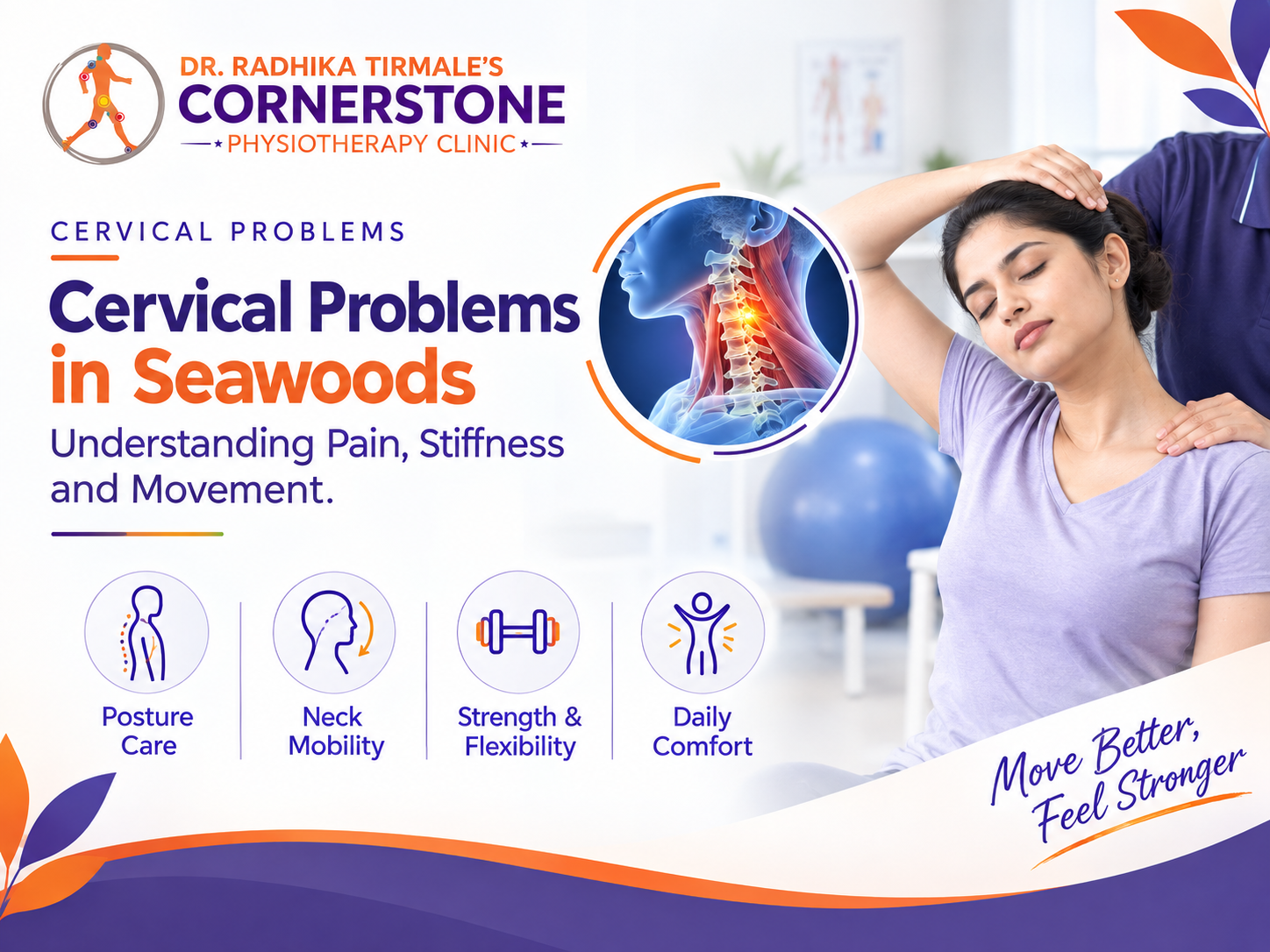
Neck discomfort can gradually become part of everyday life, especially when stiffness, poor posture, repetitive movements or age-related changes affect the cervical spine. Cervical Problem in Navi Mumbai is a common concern for people who spend long hours working at a desk, using mobile devices or performing activities that place repeated stress on the neck. At Cornerstone Physiotherapy Clinic, the cervical problem service focuses on evaluating these concerns and developing an appropriate physiotherapy approach.
What Is a Cervical Problem?
The cervical spine is the upper portion of the spine that supports the head and allows the neck to move. Cervical spondylosis refers to age-related changes involving the discs and structures of the neck. According to Cornerstone’s service page, these changes can include disc dehydration and shrinking, along with osteoarthritis-related bone changes.
While cervical changes can become more common with age, neck symptoms can also be associated with posture, repetitive activities and injuries. Understanding the possible cause is important because treatment should be based on an individual assessment rather than simply treating the discomfort.
Common Symptoms to Watch For
A Cervical Problem in Seawoods may present differently from one person to another. Neck pain and stiffness are among the symptoms described by Cornerstone Physiotherapy Clinic. Some people may notice discomfort when turning or moving the neck, while others may experience persistent soreness.
The service page also mentions dizziness, clicking, popping or grinding sounds during neck movement and muscle spasms.
Persistent symptoms should not simply be ignored, particularly when they begin interfering with work, sleep, driving or other daily activities.
How Posture Can Affect the Neck
Long periods of sitting with the head positioned forward can place additional stress on the muscles and structures around the cervical spine. Looking down at a phone for extended periods can also encourage an awkward neck position.
Workstation habits matter as well. A screen positioned too low, prolonged sitting without movement and insufficient support can contribute to discomfort. Making small ergonomic adjustments and taking regular movement breaks may help reduce unnecessary strain.
How Physiotherapy Can Help
Physiotherapy can form an important part of managing cervical problems. The Cornerstone service page explains that treatment may include exercises designed to strengthen neck muscles, improve posture and increase flexibility. Manual therapy, heat or cold applications and ergonomic advice may also be considered.
For someone seeking Cervical Problem in Navi Mumbai, a physiotherapy assessment can help identify movement limitations and understand how the symptoms are affecting everyday activities. Dr. Radhika Tirmale is listed among the physiotherapy professionals associated with Cornerstone.
Treatment is generally planned according to the person’s symptoms, physical findings and functional requirements rather than applying the same routine to everyone.
Why Early Attention Can Matter
Ignoring recurring neck discomfort may make everyday movement increasingly difficult. A person may begin avoiding certain activities because turning the head, sitting for long periods or maintaining one position becomes uncomfortable.
Someone searching for Cervical Problem in Seawoods can consider a professional assessment when symptoms remain persistent or repeatedly return. The clinic specifically advises seeking physiotherapy attention for persistent neck pain, stiffness, headaches or tingling in the arms.
Everyday Habits That Support Neck Health
Simple habits can complement a physiotherapy plan. Maintaining a comfortable posture, avoiding prolonged periods of looking downward and using suitable pillow support are among the preventive measures mentioned on the Cornerstone service page. Regular neck-strengthening exercises may also be recommended depending on individual needs.
People experiencing lower-body or spine-related discomfort alongside neck problems can also discuss their overall movement pattern with a physiotherapist. For example, symptoms affecting the lower back may be considered separately through the clinic’s Back Pain physiotherapy service.
Similarly, when pain travels along the lower back and leg, patients may need assessment for conditions such as sciatica. Information about the clinic’s Sciatica physiotherapy service can help patients understand how these concerns differ.
When Should You Consult a Physiotherapist?
A Cervical Problem in Seawoods deserves professional attention when pain or stiffness continues, repeatedly returns or starts affecting normal activities. Symptoms such as persistent headaches, arm tingling or difficulty moving the neck should also be discussed with a qualified professional.
A consultation at Cornerstone Physiotherapy Clinic allows the physiotherapist to evaluate the problem and suggest a personalised treatment approach. The clinic states that it provides one-on-one consultations and treatment plans based on the individual’s condition.
FAQs
- What commonly causes cervical problems?
Poor posture, repetitive movements, age-related changes and injuries such as whiplash can contribute to cervical problems. - Can physiotherapy help with cervical stiffness?
Physiotherapy may use exercises, manual techniques and posture or ergonomic advice to address stiffness and movement limitations. - Is gentle neck movement safe?
Gentle movement may be helpful in many situations, but exercises should be selected according to the individual’s condition. - When should I seek physiotherapy for neck pain?
Persistent pain, stiffness, headaches or arm tingling are reasons to seek professional assessment. - Can cervical problems be prevented?
Good posture, regular movement, suitable pillow support and appropriate strengthening exercises may help reduce contributing factors.