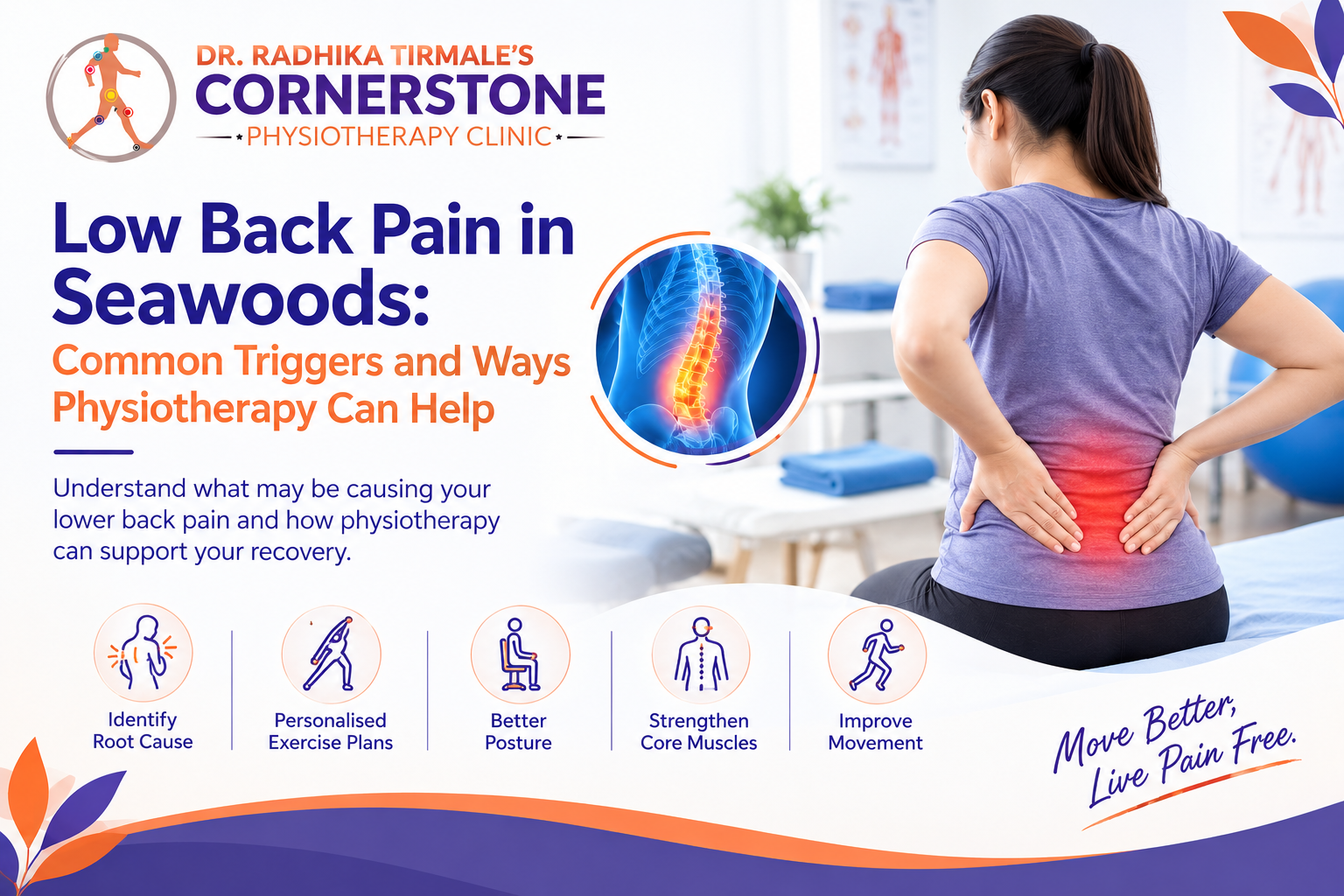
Low back pain can affect everyday activities such as sitting, walking, sleeping, bending, or lifting objects. It may develop after prolonged sitting, poor posture, physical strain, an injury, or changes affecting the spine. While occasional discomfort may improve with simple measures, recurring or persistent pain deserves proper assessment. At Cornerstone Physiotherapy Clinic, the Low Back Pain service focuses on evaluating the underlying problem and developing a personalised physiotherapy plan.
For people searching for low back pain treatment navi Mumbai, understanding what may trigger discomfort and how physiotherapy can support recovery is an important first step. Dr. Radhika Tirmale, BPT, MPT, COMT, NDS, has experience across different areas of physiotherapy practice and provides personalised assessment and treatment at the clinic.
What Can Trigger Low Back Pain?
The lower back carries a considerable amount of the body’s load during standing, sitting, walking, and movement. Certain daily habits can place additional stress on the muscles and structures around the lumbar spine.
According to the clinic’s Low Back Pain service information, possible causes include muscle strain, tension, injury, problems involving discs or joints, and changes affecting the vertebrae. Long periods of sitting and incorrect lifting techniques may also contribute to discomfort.
Poor posture is another common concern. Remaining in the same position for extended periods can increase strain around the back. People who work at a desk, spend considerable time travelling, or have limited physical activity may notice symptoms after sitting for several hours.
Signs That Your Back Pain Needs Attention
Low back pain does not feel exactly the same for everyone. Some people experience a dull, continuous ache, while others may notice sharper pain or tightness in the lower back.
Symptoms can include:
- Persistent or recurring lower back discomfort
- Tight or cramped back muscles
- Difficulty sitting or sleeping comfortably
- Pain that affects routine activities
- Discomfort extending toward the legs
- Numbness or tingling in the feet
The clinic also notes that symptoms such as groin pain or changes involving bowel movements require attention and should not simply be treated as routine muscle soreness.
If back discomfort is affecting work, mobility, or daily routines, consulting a physiotherapist can help determine whether the problem requires targeted rehabilitation.
How Physiotherapy Can Support Recovery
Physiotherapy is not simply about reducing pain temporarily. A suitable programme can focus on improving flexibility, strengthening muscles around the spine, correcting movement patterns, and helping patients develop healthier posture and activity habits.
Depending on the individual’s condition, treatment may involve therapeutic exercises, manual therapy, stretching, posture correction, and guidance on safe movement. The goal is to improve function while addressing factors that may be contributing to recurring discomfort.
For patients with broader symptoms involving the back, the clinic also provides a dedicated Back Pain physiotherapy service, which addresses factors such as prolonged sitting, poor posture, spinal injuries, and incorrect lifting.
Why Staying Completely Inactive May Not Help
When the lower back hurts, complete bed rest may seem like the easiest option. However, remaining inactive for long periods can contribute to stiffness and reduced movement. The clinic recommends maintaining gentle activity where appropriate while avoiding movements that increase pain.
A physiotherapist can help identify suitable movements and exercises according to the individual’s symptoms. Gradual strengthening and mobility work can make everyday activities easier while helping patients become more confident with movement.
How Daily Habits Affect Your Lower Back
Small changes in daily routines can make a meaningful difference to back health. Taking regular breaks from prolonged sitting, maintaining a comfortable working posture, using appropriate support while sitting, and avoiding incorrect lifting techniques can reduce unnecessary strain.
It is also important to pay attention to how the body responds to activity. Repeatedly performing movements that aggravate pain without understanding the underlying problem may delay recovery.
Back and neck discomfort can sometimes occur together, particularly when posture and prolonged screen use are involved. When relevant, patients can also learn about the clinic’s Cervical Problem physiotherapy care, which focuses on neck-related symptoms, posture, flexibility, and strengthening.
When Should You Consult a Physiotherapist?
Occasional back discomfort may settle with appropriate rest and gentle movement, but recurring or persistent symptoms should not be ignored. Professional assessment becomes particularly important when pain interferes with sleep, sitting, walking, work, or other everyday activities.
People looking for a lower back specialist near me may benefit from choosing a physiotherapy clinic where the condition can be assessed individually rather than relying on general exercises found online. At Cornerstone Physiotherapy Clinic in Seawoods, Navi Mumbai, one-on-one consultations are used to evaluate the patient’s problem and create a personalised treatment plan.
For those seeking low back pain treatment in Navi Mumbai, an individualised physiotherapy approach can help address movement limitations, muscle weakness, flexibility concerns, and posture-related factors. Similarly, anyone searching for a lower back specialist near me should consider persistent symptoms as a reason to seek professional evaluation rather than repeatedly managing them without assessment.
Frequently Asked Questions
1. What commonly causes low back pain?
Poor posture, muscle strain, prolonged sitting, injuries, disc-related problems, spinal changes, and incorrect lifting can contribute to low back pain.
2.Can physiotherapy help with recurring back pain?
Yes. Physiotherapy can focus on strengthening, flexibility, posture, movement patterns, and exercises designed around the individual’s condition.
3. Should I completely rest when my lower back hurts?
Complete inactivity is generally not the approach recommended by the clinic. Gentle movement can help with stiffness, while painful activities should be avoided.
4.When should I consult a physiotherapist for back pain?
Consider an assessment when pain persists, repeatedly returns, affects daily activities, or is accompanied by symptoms such as leg pain, numbness, or tingling.
5. Can poor posture contribute to lower back problems?
Yes. Maintaining an unsuitable posture for long periods can place additional stress on the back and may contribute to discomfort.