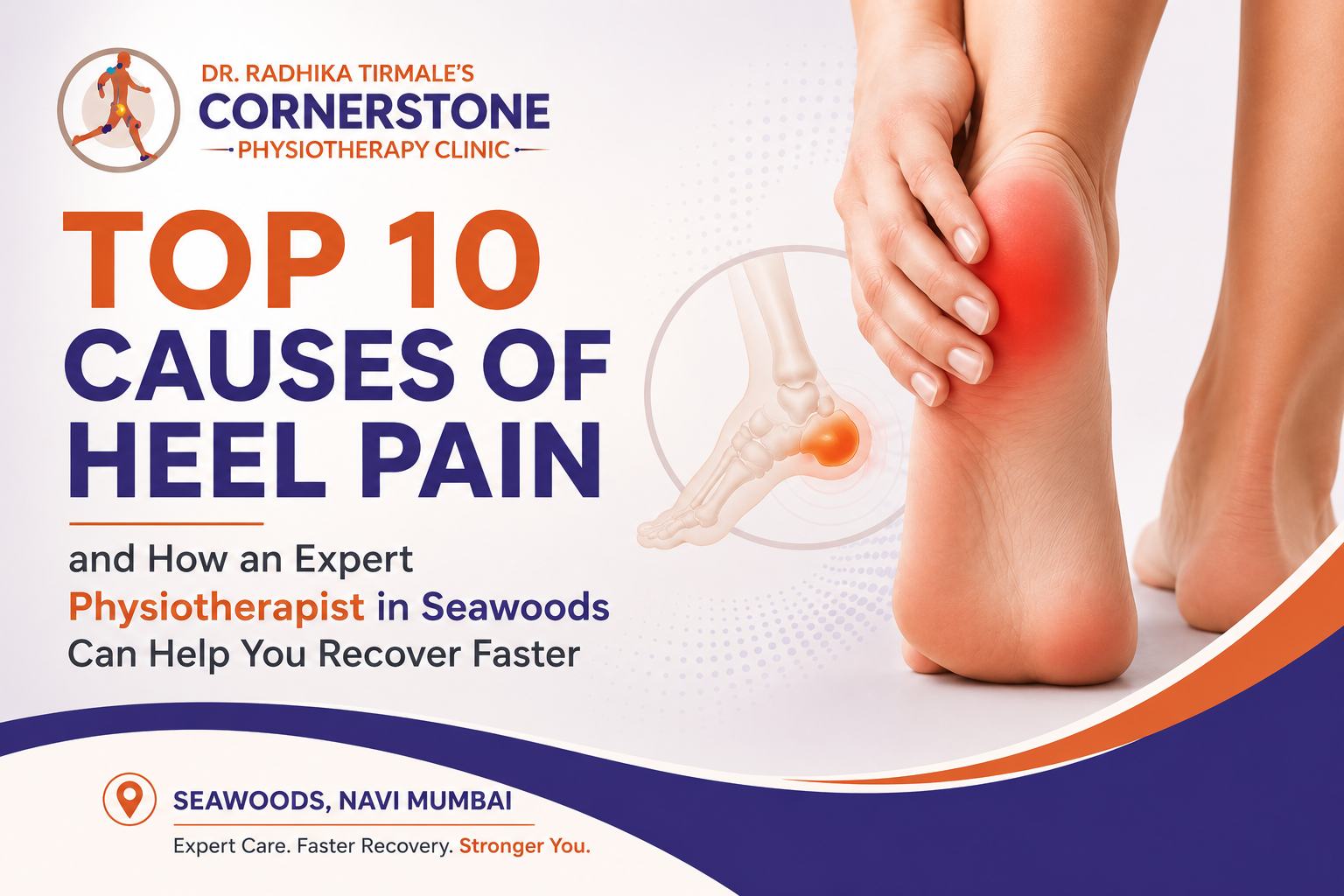
There’s a particular kind of frustration that comes with heel pain. It’s not dramatic enough to feel like an emergency, but persistent enough to ruin your morning routine, your workout schedule, and eventually your patience. This post walks through ten reasons your heel might be acting up and how targeted Heel Pain Treatment in Seawoods can turn things around faster than most people assume.
Ten Reasons Your Heel Might Be Hurting
No two cases look exactly alike, but these are the patterns we see repeating themselves in the clinic:
- Plantar Fasciitis – irritation of the connective tissue running under your foot, responsible for the majority of heel complaints we treat.
- Heel Spurs – gradual calcium buildup on the heel bone, frequently a byproduct of chronic plantar fasciitis.
- Achilles Tendinitis – a strain where the calf tendon meets the back of the heel.
- Constant Standing or Running – cumulative load from work shifts or training routines.
- Poor Footwear Choices – thin-soled shoes or extended barefoot time indoors that leave the heel unsupported.
- Sudden Increases in Body Weight – added load transferred through the foot with each step.
- Structural Foot Differences – flat arches or unusually high arches that alter pressure distribution.
- Reduced Calf Flexibility – tightness that pulls tension down into the heel.
- Nerve-Related Compression – irritation around the ankle that mimics ordinary heel soreness.
- Stress Fractures – micro-cracks in the heel bone from repeated pounding, common in distance runners.
If one or two of these sound like your situation, a focused round of Heel Pain Physiotherapy Navi Mumbai can confirm the cause rather than leaving you to piece it together yourself.
How Heel Pain Treatment in Seawoods Helps You Recover
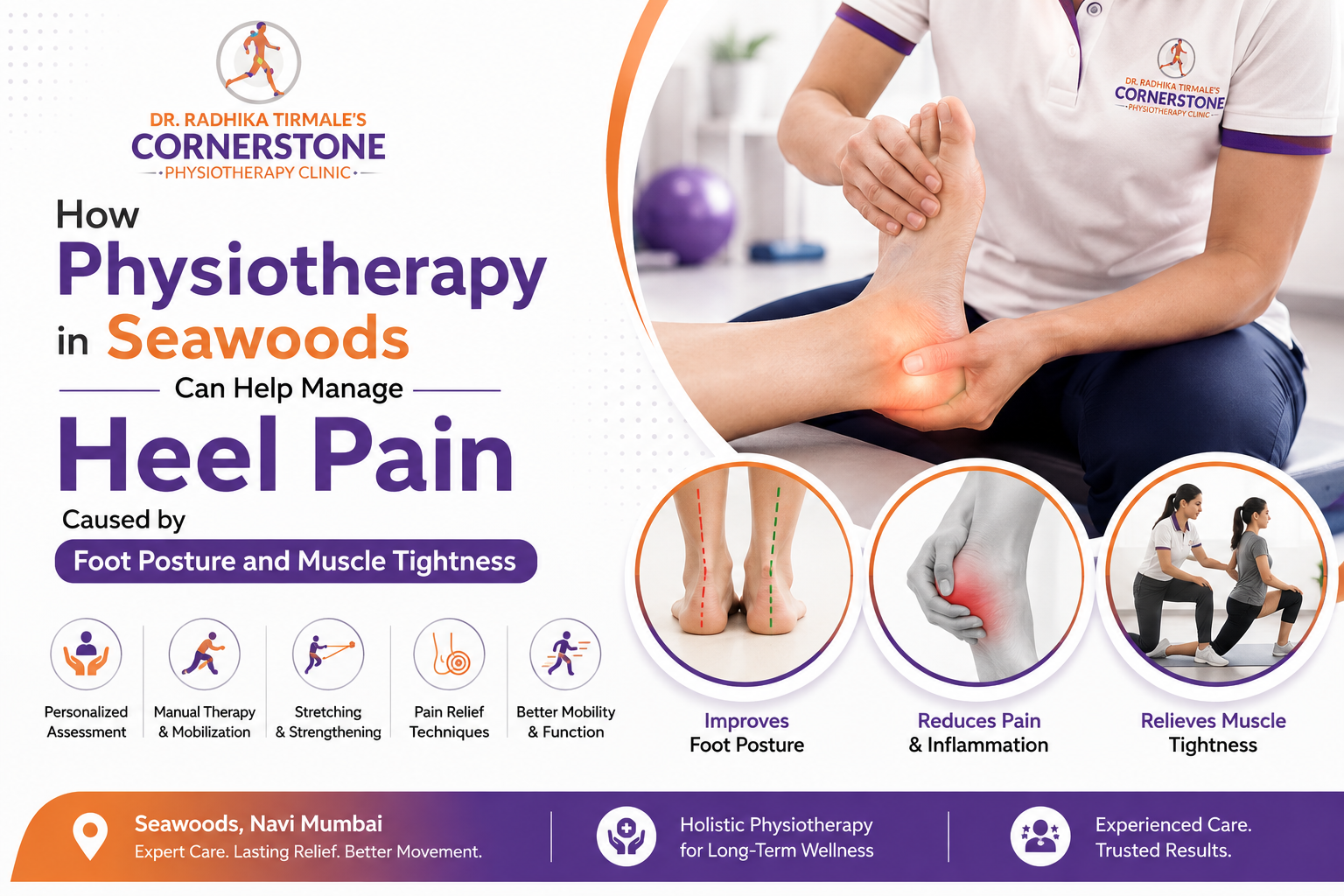
Pushing through heel pain rarely works it tends to simmer and then flare up again when you least expect it. That’s why a structured recovery process matters more than a one-off fix. At Cornerstone Physiotherapy Clinic, we skip the generic handout approach. Instead, we look closely at your walking pattern, footwear habits, foot shape, and daily routine to narrow down what’s actually causing your symptoms.
A typical plan might include:
- Hands-on techniques to ease tight, restricted tissue
- Personalized stretching and strengthening exercises
- Short-term taping or support where needed
- Practical footwear and lifestyle adjustments
- A gradual, planned return to sport or activity
It’s this layered approach that makes Heel Pain Management Seawoods genuinely stick, addressing the underlying issue instead of just numbing the symptom.
When Should You Seek Heel Pain Treatment in Seawoods?
You don’t have to wait for the pain to become unbearable. Reach out if you’re noticing:
- Sharp discomfort with your very first steps each morning
- Pain that builds the longer you’re on your feet
- Symptoms sticking around for more than two weeks despite resting
- Swelling, stiffness, or a strange tingling near the heel
Booking treatment at the first sign of trouble can save you weeks of unnecessary discomfort, especially before other parts of your body start compensating.
What Makes Cornerstone Different
Our focus isn’t temporary relief, it’s understanding why the pain showed up in the first place so it doesn’t keep coming back. Whether you’re preparing for a race, standing at work all day, or just tired of hobbling out of bed, our approach to Heel Pain Management Seawoods is shaped around your specific circumstances, not a standard script. And because we’re right in the neighbourhood, ongoing Heel Pain Treatment in Seawoods fits more easily into your week, and no long commutes are cutting into your recovery time.
Quick FAQs
Can heel pain be treated without surgery?
Almost always, yes. Most patients respond well to non-surgical treatment, particularly when it starts early.
How long does recovery usually take?
With steady care, noticeable improvement typically shows up within four to six weeks.
Do I need a referral to start physiotherapy?
No referral needed, you can book Heel Pain Physiotherapy Navi Mumbai directly, and we’ll take it from there.
Is heel pain something to worry about?
Usually not it’s most often linked to overuse or plantar fasciitis rather than anything serious. That said, pain that lingers, worsens, or comes with swelling or numbness deserves a proper check.
Can I keep exercising while getting treated?
In many cases, yes, depending on severity. Your physiotherapist will help you modify activity levels so you stay active without setting back your recovery.
Final Thoughts
Heel pain is often brushed off as a minor, everyday annoyance, something you just push through and hope it fades. But left untreated, it usually doesn’t improve on its own and can even start affecting the way you walk or putting extra strain on your knees and back. The good news is that once you understand the real cause behind it, treating it becomes far more straightforward.
If heel pain has been slowing you down, interfering with your morning walks, workouts, or even just standing comfortably through the day, don’t wait for it to get worse. Cornerstone Physiotherapy Clinic offers expert Heel Pain Treatment in Seawoods, with a proper assessment and a treatment plan built around your specific needs so you can get back to moving pain-free faster than you might expect.

Leave a Reply