
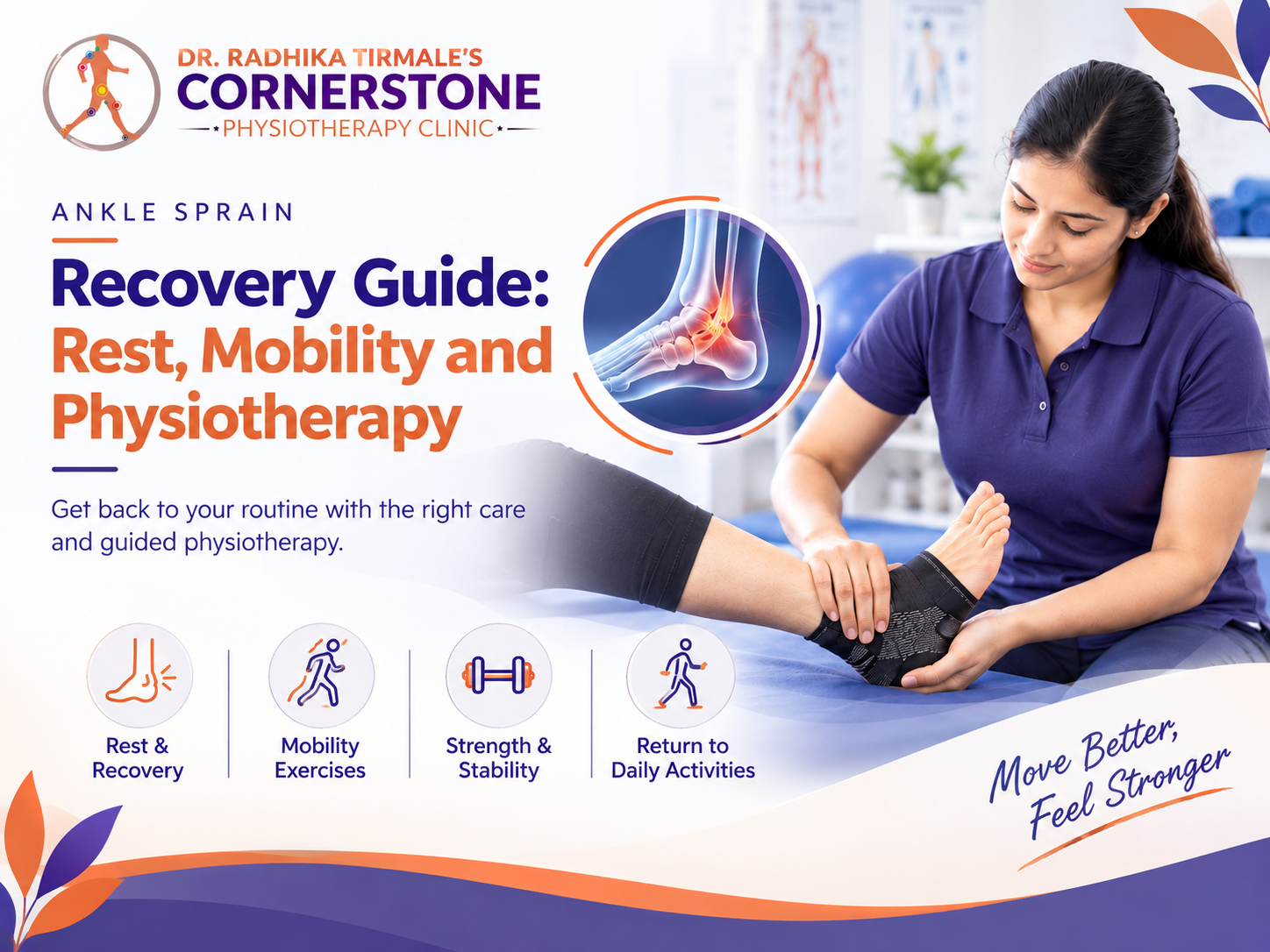
At Cornerstone Physiotherapy Clinic in Seawoods, Navi Mumbai, patients can receive personalized physiotherapy guidance for ankle injuries. Dr. Radhika Tirmale assesses the condition and recommends treatment according to the patient’s symptoms, mobility, and recovery needs.
Understanding an Ankle Sprain
An ankle sprain occurs when the ligaments assisting the ankle are stretched or torn. The outer ankle ligaments are commonly affected. The severity can range from mild stretching to a more serious ligament injury.
For anyone searching for Ankle-Sprain in Seawoods, it is important to understand that recovery involves more than simply reducing pain. The ankle may also need to regain flexibility, strength, balance, and stability.
Early Care After an Ankle Sprain
During the early stage, activities that increase pain or swelling should be avoided. Rest, elevation, compression, and cold therapy may be recommended depending on the injury.
However, complete inactivity for an extended period may lead to stiffness and weakness. Once movement is considered safe, gradual mobility exercises can help restore normal ankle function.
Those looking for best Ankle-Sprain therapy should avoid copying exercises from others because the appropriate treatment depends on the severity and type of injury.
Importance of Mobility and Strength
After an ankle sprain, people often reduce movement because of discomfort. This can affect flexibility and normal walking patterns. A physiotherapist may introduce gentle exercises to gradually restore the ankle’s range of motion.
As recovery progresses, strengthening exercises can help improve support around the ankle. Balance and stability exercises are also important because they help the body respond better to changes in surface and direction.
For patients seeking Ankle-Sprain in Seawoods, a personalized rehabilitation program can help address weakness, stiffness, and instability rather than focusing only on temporary pain relief.
How Physiotherapy Supports Recovery
Physiotherapy can support recovery through mobility exercises, strengthening, balance training, functional exercises, and gradual return-to-activity guidance.
A best Ankle-Sprain therapy approach should be based on the individual’s condition and daily requirements. Someone returning to sports may require a different rehabilitation plan from someone recovering for normal walking and daily activities.
Previous ankle injuries can also affect movement elsewhere in the lower limb. Persistent heel discomfort, for example, may benefit from appropriate assessment and heel pain physiotherapy.
Preventing Another Ankle Sprain
An ankle may feel better before its strength and stability have completely returned. Returning to sports or strenuous activity too quickly can escalate the risk of another injury.
Regular strengthening, balance exercises, suitable footwear, and a gradual return to physical activity can help support ankle stability. Persistent pain, significant swelling, difficulty bearing weight, or repeated sprains should be professionally assessed.
For individuals searching for Ankle-Sprain in Seawoods, physiotherapy can help identify movement limitations and create a structured recovery plan.
When Should You See a Physiotherapist?
Professional assessment can be useful when ankle pain continues, movement remains restricted, the ankle feels unstable, or normal activities are difficult. A physiotherapist can assess strength, flexibility, balance, walking patterns, and functional movement.
At Cornerstone Physiotherapy Clinic, Dr. Radhika Tirmale can guide patients through an individualized rehabilitation approach based on their recovery stage and functional goals.
Frequently Asked Questions
1. How long does an ankle sprain take to recover?
Recovery depends on the severity of the injury. Mild sprains may improve sooner, while more significant ligament injuries can require a longer rehabilitation period.
2. Can I walk after an ankle sprain?
Some mild sprains allow limited walking, while more serious injuries may make weight-bearing difficult. Activities should be resumed according to symptoms and professional guidance.
3. Can physiotherapy help an ankle sprain?
Yes. Physiotherapy can help improve ankle mobility, strength, balance, stability, and functional movement during recovery.
4. Why does my ankle feel weak after the pain improves?
Pain can decrease before strength and stability are fully restored. Rehabilitation exercises can help address remaining weakness and balance difficulties.
5. Can an ankle sprain happen again?
Yes. Previous ankle sprains can increase the risk of another injury, especially if strength, mobility, and balance have not been fully restored.