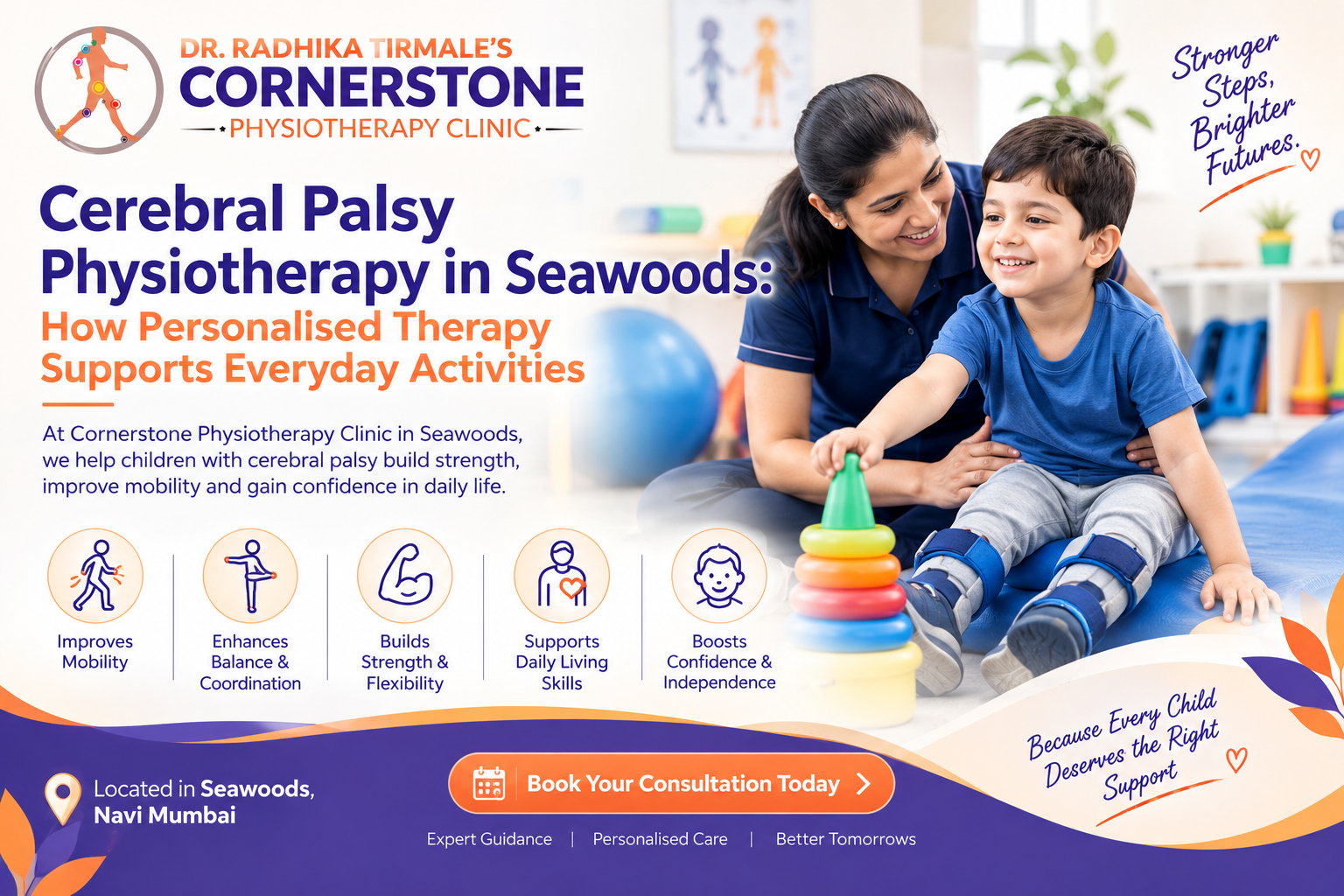
Cerebral palsy is a group of conditions that affect movement, muscle control, posture, and coordination. It usually develops because of changes or damage to the developing brain before, during, or shortly after birth. The effects vary from child to child. Some children may experience mild movement difficulties, while others may need ongoing support with walking, sitting, balance, or everyday tasks.
Although cerebral palsy cannot be cured, appropriate therapy can help children develop useful skills and work towards greater independence. Cornerstone Physiotherapy Clinic in Seawoods provides physiotherapy services under the care of Dr. Radhika Tirmale. Families looking for cerebral palsy treatment Navi Mumbai can discuss their child’s movement needs with a qualified physiotherapy professional and understand which therapy goals may be suitable.
How Can Physiotherapy Benefit Children with Cerebral Palsy?
Physiotherapy focuses on movement, strength, flexibility, balance, and functional skills. A physiotherapist first assesses the child’s abilities, challenges, and everyday routine. Based on this assessment, the therapist develops a plan that suits the child’s age, needs, and level of mobility.
1. Improving Balance and Coordination
Some children with cerebral palsy find it difficult to maintain balance while sitting, standing, or walking. Therapy may include supported standing, guided movement activities, and balance exercises suited to the child’s abilities. These activities can help children practise body control and improve confidence during movement.
2. Supporting Muscle Strength and Flexibility
Changes in muscle tone can make certain movements difficult. Some muscles may feel unusually tight, while others may need support to develop strength. A physiotherapist may use gentle stretching, strengthening exercises, and guided movements to help maintain flexibility and support functional movement.
The programme should be decided according to the child. Exercises that work well for one child may not be appropriate for another, so professional guidance is important.
3. Practising Everyday Activities
Children often need opportunities to practise skills they use at home, school, and during play. Depending on their abilities, therapy may focus on rolling, sitting, standing, transferring between positions, or walking with support.
Physiotherapy for Cerebral Palsy can also help families understand how to encourage safe movement during daily routines. Parents and caregivers may learn ways to support practice at home without placing unnecessary strain on the child.
4. Encouraging Mobility and Participation
Some children benefit from walking practice, suitable mobility aids, or exercises that improve movement control. The aim is not to compare a child’s progress with others, but to help them build skills that matter in their own life.
A physiotherapist may also work with the family to identify practical goals, such as moving around the classroom, participating in play, or completing specific activities with less assistance.
Why Is an Individualised Therapy Plan Important?
Cerebral palsy affects each child differently. The type of movement difficulty, muscle tone, balance, communication needs, and other health concerns can influence the therapy plan. A detailed assessment helps the physiotherapist choose activities that match the child’s abilities and set realistic goals.
At Cornerstone Physiotherapy Clinic, families can enquire about the clinic’s cerebral palsy physiotherapy service and discuss an appropriate care plan. Regular reassessment helps the therapist review progress and adjust exercises as the child develops.
Therapy may also involve coordination with paediatricians, occupational therapists, speech therapists, or other healthcare professionals when needed. This team-based approach can help address different aspects of a child’s development.
How Can Parents Support Progress at Home?
Parents and caregivers play an important role in helping children practise the skills they learn during therapy. Follow the physiotherapist’s instructions and include recommended activities in the child’s routine when appropriate.
Helpful steps may include:
- Practising prescribed exercises consistently and safely.
- Allowing enough time for the child to complete activities.
- Using supportive seating and positioning as advised.
- Encouraging play and participation without forcing painful movements.
- Sharing changes, discomfort, or new concerns with the treating professional.
Children with movement difficulties may also need attention to foot position, walking patterns, or joint comfort. If a child develops a separate foot concern, a physiotherapist may assess it and advise whether further care is needed. Information about heel pain assessment and treatment explains how foot discomfort may require its own evaluation.
When Should a Child Be Assessed?
Consider seeking professional advice if your child has difficulty controlling head movements, sitting, standing, walking, or using their limbs. A child who has already received a cerebral palsy diagnosis may benefit from regular reviews as their needs change with growth.
Physiotherapy cannot guarantee specific outcomes, and progress differs between children. However, an individualised plan, regular practice, and family involvement can help support functional abilities and participation in everyday life.
Frequently Asked Questions
1. Can physiotherapy cure cerebral palsy?
No. Physiotherapy does not cure cerebral palsy, but it can help improve movement skills, flexibility, strength, and participation in daily activities.
2. At what age can a child begin physiotherapy?
The timing depends on the child’s needs and clinical assessment. Early evaluation can help identify suitable support and developmental goals.
3. How often a child must attend physiotherapy?
The frequency depends on the child’s abilities, goals, and response to therapy. The physiotherapist will recommend a schedule and review it when needed.
4. Can parents perform exercises at home?
Yes, when the physiotherapist provides suitable instructions. Caregivers should avoid introducing unfamiliar exercises or forcing movements without professional guidance.
5. Does every child with cerebral palsy need the same treatment?
No. Cerebral palsy affects children differently. Therapy should reflect each child’s movement abilities, daily needs, and individual goals.